


History of Vinyasa Yoga
Origin: Vinyasa yoga developed from traditional Indian yoga practices.
Modern development: Yoga teacher T. Krishnamacharya (1888–1989) played a major role in shaping modern flowing yoga sequences during the 20th century.
Global popularity: Vinyasa-style classes spread internationally especially during the late 20th century.
Today: Vinyasa yoga is widely practiced as a dynamic form of yoga that combines movement, breathing, flexibility and strength.
Note: Vinyasa has historical roots in older yoga traditions but its exact origins as a modern yoga style are not fully documented.
Vinyasa Flow Yoga
Vinyasa yoga is a style of yoga that links movement with breathing. Instead of holding one pose for a long time you move through a sequence of poses at a steady pace.
How Does Vinyasa Yoga Work?
Vinyasa yoga uses several elements to create a complete workout:
- Continuous movement: You move between poses with fewer long breaks.
- Controlled breathing: You coordinate your breath with each movement.
- Bodyweight exercises: Many poses engage your arms, legs, shoulders, and core.
- Balance and coordination: You control your body as you change positions.
- Mindful movement: You pay attention to your posture, breathing, and movement quality.
These elements make Vinyasa yoga a useful option for people who want to combine physical activity with relaxation.
Can Vinyasa Flow Yoga Help With Weight Loss?
Yes vinyasa flow yoga for weight loss can support weight management as part of a healthy lifestyle. Its continuous movements increase physical activity and may raise your heart rate, depending on the pace and difficulty of the session.
However weight loss depends on several factors. Your food intake, overall activity level, sleep, health, and consistency all affect your results.
Vinyasa Flow Yoga for Weight Loss works best when you treat it as one part of your fitness routine rather than a quick solution.
1. Inyasa Flow Yoga Helps You Burn Calories
Your body uses energy whenever you move. A Vinyasa session can burn calories because it involves repeated movements, balance and muscle engagement.
The number of calories you burn depends on your body weight, workout intensity, fitness level and session length. A faster session may require more energy than a gentle routine.
Remember that calorie estimates can vary widely. Do not rely on yoga alone to create a large calorie deficit.
2. It Builds Muscular Strength
Many Vinyasa poses use your body weight as resistance. Plank, chair pose and warrior poses challenge different muscle groups.
Regular practice can help you develop strength and muscular endurance. Stronger muscles also make everyday movements such as climbing stairs or carrying groceries easier.
Yoga does not replace every type of strength training. You can combine it with resistance exercises to develop a more balanced fitness routine.
3. Inyasa Flow Yoga Improves Flexibility and Mobility
Tight muscles can make exercise uncomfortable especially when you spend much of the day sitting. Vinyasa yoga takes your body through different positions that encourage controlled movement.
Poses such as downward-facing dog, low lunge and triangle pose work different areas of the body. Regular practice may improve your range of motion over time.
Move slowly when you start. Never force a stretch or push through sharp pain.
4. It Supports Stress Management
Stress can affect sleep, eating habits, and motivation. Some people eat more when they feel stressed, while others struggle to maintain a regular exercise routine.
Yoga combines movement with focused breathing, which may help you feel calmer. A regular practice can also give you a short break from daily distractions.
Yoga cannot eliminate every source of stress, but it can become a useful part of your self-care routine.
5. It Encourages Consistency
A workout does not need to last an hour to become a useful habit. A short routine may feel easier to fit into a busy schedule.When you practice for 20 minutes you can focus on movement without making your daily plan too complicated.
Consistency matters more than choosing an intense workout that you cannot maintain. Start at a comfortable level and gradually increase the challenge.
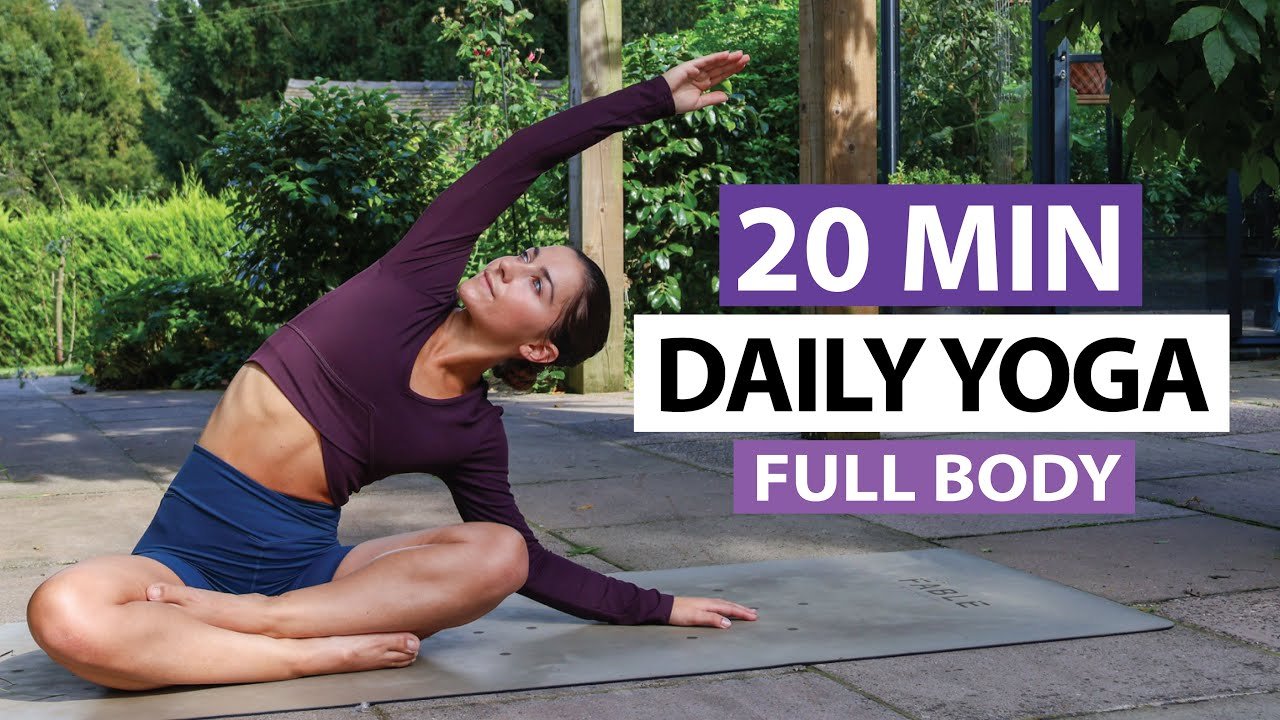
20-Minute Vinyasa Flow Yoga Routine For Weight Loss
You do not need special equipment to begin. Find a clear space, use a yoga mat if available and wear comfortable clothing.
This routine includes a warm-up, flowing poses and a cool-down. Beginners can move slowly and rest whenever necessary.
Minutes 1–3: Warm Up Your Body
Start with gentle movements to prepare your muscles and joints.
Cat-Cow Pose
- Begin on your hands and knees.
- Place your wrists under your shoulders and knees under your hips.
- Inhale as you gently lift your chest and tailbone.
- Exhale as you round your back and draw your chin inward.
- Repeat slowly for several breaths.
Cat-Cow encourages gentle movement through the spine and helps you connect your breathing with your body.
Child’s Pose
- Kneel on your mat and bring your big toes together.
- Sit your hips back toward your heels.
- Extend your arms forward or rest them beside your body.
- Breathe slowly and relax your shoulders.
Stay here for a few comfortable breaths before moving into the main sequence.
Minutes 4–7: Practice Sun Salutations
Sun Salutations connect several poses into a flowing sequence. They help warm up your body and introduce the rhythm of Vinyasa yoga.
Follow these steps:
- Mountain Pose: Stand tall with your feet comfortable and your shoulders relaxed.
- Upward Reach: Inhale and raise your arms overhead.
- Forward Fold: Exhale and bend forward from your hips, keeping your knees slightly bent if needed.
- Halfway Lift: Inhale and lengthen your spine.
- Step Back: Move into a plank position or place your knees on the mat.
- Lower Down: Bend your elbows gently, or lower your knees, chest, and chin with control.
- Cobra Pose: Inhale and lift your chest without forcing your lower back.
- Downward-Facing Dog: Exhale and lift your hips upward and back.
- Return to Standing: Step forward and slowly rise to Mountain Pose.
Key Points to Know:Repeat the sequence at a comfortable pace. Beginners can skip difficult transitions and take extra breaths between movements.
Minutes 8–11: Add Strength-Building Poses
Now focus on poses that challenge your legs, arms, and core.
Plank Pose
- Place your hands under your shoulders.
- Extend your legs behind you.
- Keep your body in a straight line.
- Engage your abdomen and breathe normally.
- Hold for 10–20 seconds, or less if needed.
You can place your knees on the mat to make the pose easier.
Warrior II
- Stand with your feet wide apart.
- Turn your front foot outward and bend your front knee comfortably.
- Extend your arms to the sides.
- Keep your chest lifted and your shoulders relaxed.
- Hold for several breaths, then change sides.
Key Points to Know:Warrior II works the legs and challenges your balance. Keep your front knee aligned with your toes.
Chair Pose
- Stand with your feet hip-width apart.
- Bend your knees and move your hips backward as if sitting on a chair.
- Raise your arms if that feels comfortable.
- Keep your chest lifted and breathe steadily.
- Hold for three to five breaths.
These poses help build muscular endurance, which supports your overall fitness.
Minutes 12–15: Continue the Flow
During this part, connect movements instead of holding every pose for a long time.
Low Lunge
- Step one foot forward between your hands.
- Lower your back knee onto the mat.
- Keep your front knee aligned with your foot.
- Lift your chest and breathe comfortably.
- Switch sides after several breaths.
Low Lunge encourages movement through the hips and thighs.
Downward-Facing Dog
- Place your hands firmly on the mat.
- Lift your hips up and back.
- Keep your knees bent if your hamstrings feel tight.
- Relax your neck and avoid forcing your heels toward the floor.
Plank to Downward-Facing Dog
- Start in Plank Pose.
- Press through your hands.
- Move your hips upward and back into Downward-Facing Dog.
- Return to Plank with control.
- Repeat several times while breathing naturally.
This transition engages the shoulders, arms, and core. Reduce the repetitions if your form starts to change.
Minutes 16–18: Add Core and Balance Work
Core exercises help strengthen the muscles around your abdomen and trunk. They do not specifically burn belly fat, but they can improve stability.
Knee-to-Chest From Plank
- Begin in Plank Pose.
- Bring one knee toward your chest.
- Return your foot to the starting position.
- Repeat with the other knee.
- Alternate sides slowly while keeping your back stable.
Complete a few repetitions on each side. Use a hands-and-knees position if Plank feels too difficult.
Tree Pose
- Stand tall and shift your weight onto one foot.
- Place the other foot against your ankle or inner calf.
- Keep your hands at your chest or raise them overhead.
- Look at a fixed point to help maintain balance.
- Change sides after several breaths.
Avoid placing your foot directly against your standing knee. Use a wall for support if necessary.
Minutes 19–20: Cool Down
Finish with slower movements to help your breathing return to normal.
Seated Forward Fold
Sit with your legs extended. Bend your knees slightly if needed, and lean forward from your hips without pulling on your feet.
Easy Seated Breathing
Sit comfortably, relax your shoulders, and take slow, natural breaths. Allow your heart rate to settle gradually.
Do not rush the cool-down. If you feel dizzy, unusually breathless, or unwell, stop and rest.
Key Tips for a Successful Yoga Practice
A regular routine can help you build fitness but your habits outside the session also matter.
1. Start at Your Own Level
You do not need to perform every pose perfectly. Begin with easier variations and focus on controlled movement.
If you are new to yoga practice two or three times a week at first. Increase your frequency as your body adjusts.
2. Focus on Proper Form
Good technique helps you move with better control. Keep your joints in comfortable positions and avoid forcing deep stretches.
Use blocks, cushions or a folded towel when they make a pose more comfortable.
3. Combine Yoga With Other Activities
Yoga is one way to stay active, but you can also include walking, cycling, swimming, or strength training.
For general health, adults should aim for at least 150 minutes of moderate-intensity aerobic activity each week, along with muscle-strengthening activities on two or more days, as recommended by public health guidelines.
Choose activities that fit your fitness level and schedule.
4. Eat Balanced Meals
Your body needs enough nutrients to support movement and recovery. Choose a variety of foods including:
- Protein: Eggs, beans, lentils, fish, chicken, tofu or yogurt.
- Vegetables and fruit: Sources of vitamins, minerals and fiber.
- Whole grains: Oats, brown rice and whole-wheat bread.
- Healthy fats: Nuts, seeds and olive oil.
- Water: Drink regularly throughout the day and replace fluids lost during exercise.
Key Points to Know:Avoid crash diets and extreme food restrictions. A sustainable eating pattern is more useful than a short-term approach you cannot maintain.
5. Give Your Body Time to Recover
Rest helps your body adapt to exercise. Aim for adequate sleep and take easier days when your muscles feel tired.
You can alternate Vinyasa sessions with walking or gentle stretching. You do not need to perform an intense workout every day.
Mistakes That Can Affect Your Yoga Results
A few simple changes can make your practice more comfortable and sustainable.
- Moving too quickly: Speed should never replace proper technique.
- Holding your breath: Keep breathing naturally throughout the sequence.
- Ignoring pain: Stop if you experience sharp pain or unusual symptoms.
- Expecting immediate weight loss: Progress depends on your overall habits and individual circumstances.
- Skipping warm-ups: Prepare your body before attempting more demanding poses.
- Practicing without rest: Give yourself time to recover when needed.
- Comparing your progress with others: Flexibility, strength and fitness vary from person to person.
Important Things to Know:If you have an injury, balance problems, a significant medical condition or are pregnant seek appropriate professional guidance before starting a new yoga routine. Modify poses to suit your needs.
Vinyasa Yoga Schedule For Weight Loss
Your ideal schedule depends on your experience, recovery and other physical activities.
Here is a simple weekly plan for beginners:
- Monday: 20-minute Vinyasa flow.
- Tuesday: A comfortable walk or another light activity.
- Wednesday: 20-minute Vinyasa flow.
- Thursday: Rest or gentle stretching.
- Friday: 20-minute Vinyasa flow.
- Saturday: Walking, cycling, or another activity you enjoy.
- Sunday: Rest and recovery.
You can adjust this plan as your fitness improves. Some people prefer shorter sessions more often while others enjoy longer sessions a few times per week.
The goal is to develop a routine you can maintain without feeling exhausted.
Expected Results From Regular Yoga Practice
When practicing vinyasa flow yoga for weight loss remember that there is no single timeline for results. Your progress depends on your starting point, food intake, activity level, sleep, genetics, and consistency. You may notice improvements in balance, mobility or how comfortably you complete poses before seeing a noticeable change in body weight.Track more than the number on the scale. Pay attention to your energy levels, workout consistency, strength and ability to move with control. If weight loss is your goal, focus on gradual progress instead of expecting dramatic changes in just a few days.
Sum up About Vinyasa Flow Yoga
Vinyasa Flow Yoga for Weight Loss offers a practical way to combine movement, strength, flexibility, and mindful breathing in one session. A 20-minute routine can help you build a regular exercise habit without needing an expensive gym membership or complicated equipment. Start with the basic poses, move at a comfortable pace and increase the difficulty gradually. Combine yoga with balanced meals, regular physical activity and enough rest to support your overall health. Most importantly, choose a routine that feels manageable. You do not need to push your body to the limit to make progress. With patience and consistency you can develop better movement habits and work toward your personal fitness goals.
Common Questions About Vinyasa Flow Yoga
1. Is Vinyasa Flow Yoga Good for Weight Loss?
Yes, Vinyasa Flow Yoga can support weight loss by increasing physical activity, building strength and improving overall fitness. Combining it with a balanced diet can help you achieve better results.
2. How Many Calories Does Vinyasa Yoga Burn?
Calorie burn depends on your body weight, workout duration and practice intensity. Faster more challenging sessions generally burn more calories than gentle sessions.
3. Can Beginners Practice Vinyasa Yoga for Weight Loss?
Yes, beginners can start with basic poses and slower flows. Gradually increasing the intensity can help improve strength, flexibility and endurance.
4. How Many Minutes of Vinyasa Yoga Should I Do Daily?
Beginners can start with 10–20 minutes per session and gradually increase their practice as their fitness improves. Consistency is more important than pushing yourself too hard.
5. Can I Lose Belly Fat With Vinyasa Yoga?
Vinyasa Yoga can help increase activity and strengthen your core but it cannot specifically target belly fat. Overall fat loss depends on consistent exercise, balanced nutrition and other lifestyle habits.
