


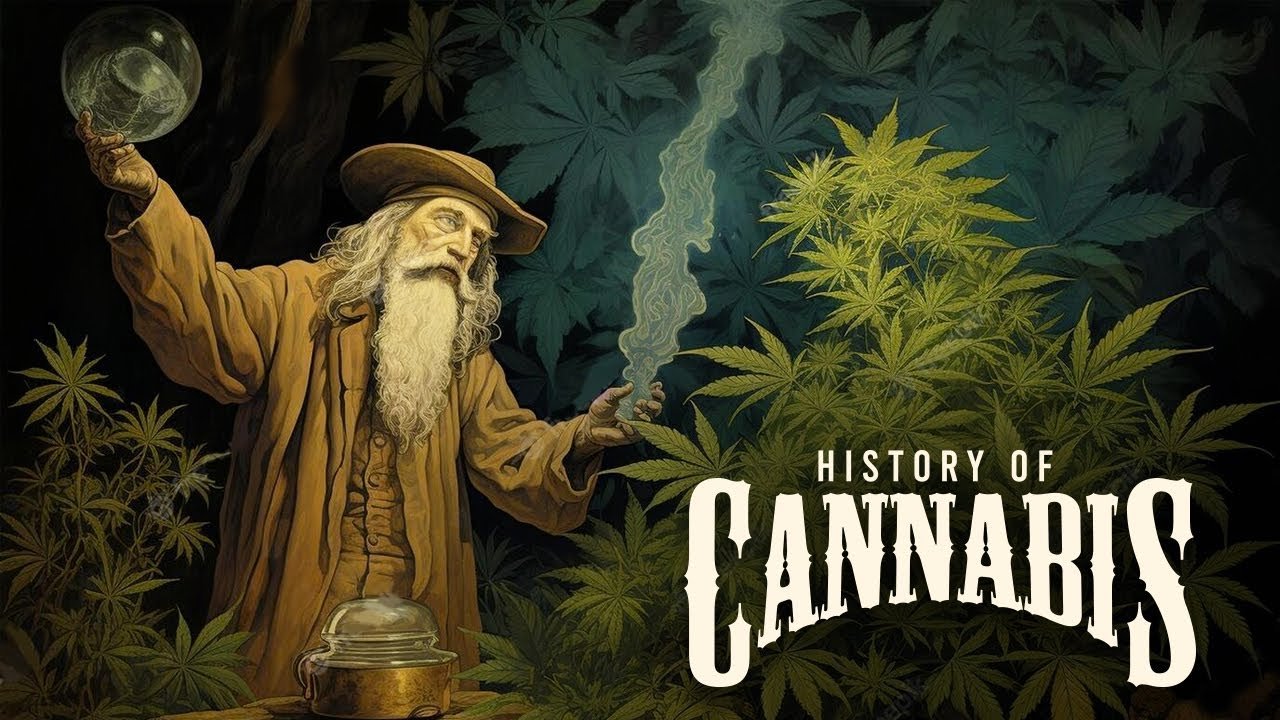
CBD also known as Cannabidiol is one of the most well-known natural compounds found in the cannabis plant. Today millions of people know CBD because it is used in oils, gummies, capsules, skincare products and wellness supplements. However its journey started thousands of years ago. Long before scientists gave it the name “CBD,” people were already using the cannabis plant for different purposes.
Scientists Later Identified Cannabinoids
For many centuries people only recognized cannabis as a useful plant. They had no idea that it contained more than one hundred natural compounds called cannabinoids. Modern science later identified it as one of the major cannabinoids. Unlike THC, it does not produce the intoxicating effects commonly associated with cannabis. This difference became one of the main reasons why researchers started studying CBD separately.
CBD Research Evolved Over Time
The history of CBD is a story of ancient traditions, scientific discoveries and modern research. Every major discovery helped scientists understand how this natural compound works and why it has become one of the most researched cannabinoids today.
Early History (Ancient Times)
Long before modern medicine existed, ancient civilizations were already familiar with the cannabis plant. Historical records suggest that cannabis was used for medicine, textiles, food and religious ceremonies in different parts of the world.
Cannabis in Ancient China
The earliest known reference to cannabis comes from ancient China around 2700 BCE. Historical writings mention Shennong who is traditionally known as the Father of Chinese herbal medicine. Ancient texts describe cannabis as one of the many plants used in herbal practices.
At that time people did not know about CBD or THC because laboratory science did not exist. They simply observed how the plant behaved and used it according to their experience. Cannabis was valued because it was easy to grow and had many practical uses.
Cannabis in Ancient India
Over time, cannabis spread to India where it became part of Ayurveda, one of the world’s oldest traditional healthcare systems.
Ancient Ayurvedic texts mention cannabis as a plant that was used in different herbal preparations. It also became part of some cultural and religious traditions. People relied on practical knowledge that had been passed from one generation to another instead of scientific experiments.
Although ancient healers could not identify cannabinoids their observations helped preserve knowledge about the cannabis plant for centuries.
Cannabis Reaches Other Civilizations
As trade routes expanded, cannabis reached the Middle East, Egypt, Greece and later Europe. Different civilizations found different uses for the plant. Some communities grew it for strong natural fibers that were used to make ropes, clothing and paper. Others included it in traditional herbal practices.
Ancient Cannabis and the Unknown Cannabinoids
Researchers believe that these early civilizations unknowingly worked with different cannabis varieties. Some plants naturally contained higher levels of THC while others were richer in it.
However nobody understood the chemical differences because scientists had not yet developed the tools needed to study the plant at the molecular level.
Even though ancient cultures did not know about cannabinoids they played an important role in preserving cannabis until modern scientific research began.
Discovery of CBD
The real scientific journey of CBD started during the twentieth century. As chemistry and laboratory technology improved, researchers became interested in understanding what chemicals were present inside the cannabis plant.
Scientists wanted to know why cannabis produced different effects and whether its natural compounds worked independently.
Roger Adams Isolates CBD
A major breakthrough happened in 1940 when American chemist Roger Adams and his research team at the University of Illinois successfully isolated Cannabidiol (CBD) from the cannabis plant.
This was the first time researchers proved that cannabis was not just one single chemical substance. Instead it contained multiple compounds with different structures and properties.
Although Roger Adams successfully separated it from cannabis, scientists still did not fully understand its chemical structure or how it worked inside the human body.
Laboratory technology at that time was not advanced enough to answer these questions.Despite these limitations his research became the foundation for future cannabinoid studies.
Why This Discovery Changed Cannabis Research
Roger Adams’ work encouraged scientists around the world to continue studying cannabinoids.
Researchers realized that every compound inside cannabis could have its own biological activity. This changed the direction of cannabis research completely. Instead of studying the plant as one substance, scientists started investigating each cannabinoid separately.
Universities and research laboratories gradually invested more time in cannabinoid chemistry. These early discoveries later helped researchers identify THC, understand cannabinoid receptors and eventually discover the Endocannabinoid System.
Key Points to Know:Without Roger Adams’ contribution modern it research would have developed much more slowly.
THC Discovery
After it was isolated researchers wanted to identify the compound responsible for the psychoactive effects of cannabis.
This question remained unanswered until the 1960s.
Raphael Mechoulam’s Research
In 1963 Israeli scientist Raphael Mechoulam successfully identified the complete chemical structure of it.
His research provided scientists with much clearer information about how it is built at the molecular level.
Only one year later, in 1964, Mechoulam and his research team identified the chemical structure of THC (Tetrahydrocannabinol).
This discovery became one of the biggest milestones in cannabis science because researchers finally understood which cannabinoid causes the intoxicating effects commonly associated with marijuana.
CBD and THC: Two Different Cannabinoids
The discovery of THC helped researchers compare it with it.
Scientists found that although both compounds come from the same plant they behave differently inside the human body.
THC interacts strongly with cannabinoid receptors in the brain, producing psychoactive effects. CBD works differently and does not create the same intoxicating response.
This finding encouraged researchers to study CBD separately instead of treating all cannabinoids as the same substance.
Today scientists recognize that cannabis contains more than 100 naturally occurring cannabinoids each with its own chemical structure and biological activity.
Key Points to Know:Raphael Mechoulam continued publishing cannabinoid research for several decades. His work influenced universities, medical researchers and pharmaceutical companies around the world. Because of his lifelong contribution he is widely known as the “Father of Cannabis Research.”
Endocannabinoid System Discovery
Scientists spent many years studying CBD and THC but one important question remained unanswered. How do these compounds actually work inside the human body? Researchers knew that cannabinoids produced different effects but they could not explain the process.
How Scientists Discovered the ECS
The answer came in the early 1990s when scientists discovered a natural signaling network inside the human body called the Endocannabinoid System (ECS). Many experts consider this one of the biggest breakthroughs in cannabinoid research because it completely changed the way scientists understood it.
This discovery happened while researchers were trying to understand how THC affects the brain. Instead of finding only THC-related activity, they discovered that the human body already has its own cannabinoid receptors and cannabinoid-like compounds.
Discovery of Anandamide
In 1992 Israeli scientist Raphael Mechoulam and his research team discovered the first naturally occurring endocannabinoid. They named it Anandamide.
The word Anandamide comes from the Sanskrit word “Ananda,” which means joy or bliss.
This discovery surprised the scientific community because researchers realized that the human body naturally produces cannabinoid-like molecules without using cannabis.
Scientists later found that Anandamide plays a role in several normal body functions. It acts as a chemical messenger that helps different parts of the body communicate with each other.
Key Points to Know:The discovery of Anandamide proved that cannabinoids are not only found in plants. The human body also produces similar compounds that help maintain normal biological functions.
CB1 and CB2 Receptors
After discovering Anandamide, researchers focused on identifying the receptors that respond to cannabinoids.They identified two major cannabinoid receptors.
The first receptor is called CB1.
Researchers found that CB1 receptors are mainly located in the brain and central nervous system. These receptors are involved in functions such as memory, mood, learning, movement, and pain perception.
The second receptor is called CB2.
CB2 receptors are mostly found in immune cells and tissues throughout the body. Scientists believe these receptors help regulate immune responses and inflammatory processes.
This discovery helped researchers understand why different cannabinoids may affect different parts of the body in different ways.
How CBD Interacts with the ECS
Unlike THC, it does not strongly bind to CB1 or CB2 receptors.
Instead, researchers believe it works in a more complex way by influencing different signaling pathways within the Endocannabinoid System.
Key Points to Know:Scientists are still studying these interactions. Over the past two decades, universities and medical research centers have published hundreds of studies exploring how it may influence normal biological processes. Although many laboratory and animal studies have reported interesting findings, experts continue to emphasize that more large-scale human clinical trials are needed.
Why the ECS Discovery Changed it Research
The discovery of the Endocannabinoid System completely changed cannabinoid science.Before the 1990s, most researchers focused on studying the cannabis plant itself.
After the ECS was discovered, scientists shifted their attention to understanding how cannabinoids interact with systems that already exist inside the human body.
Medical schools, pharmaceutical companies and research organizations began investing more resources into cannabinoid research. Scientists started exploring the relationship between cannabinoids, receptors, enzymes and naturally produced endocannabinoids.
Today researchers consider the Endocannabinoid System one of the most important biological discoveries related to cannabinoid science. It continues to be a major focus of modern CBD research.
Modern CBD Industry
The CBD industry has grown rapidly over the last twenty years. What was once a small area of scientific research has now become a global wellness market worth billions of dollars.
Today its products are sold in pharmacies, wellness stores, skincare brands, health clinics and online marketplaces across many countries.
Growing public awareness, improved research and changes in hemp regulations have all contributed to this expansion.
From Laboratory Research to Consumer Products
In the early years it was mainly studied inside research laboratories.As more scientific papers were published, companies began developing products for consumers.
The first products were mostly CBD oils and tinctures.Over time manufacturers introduced many new product categories to meet different consumer preferences.
Today people can find:
- CBD Oil
- CBD Gummies
- CBD Capsules
- CBD Softgels
- CBD Creams
- CBD Balms
- CBD Skincare Products
- CBD Beverages
- CBD Pet Products
Key Points to Know:This wide variety has made it one of the fastest-growing sectors within the hemp industry.
Modern CBD Extraction Methods
Another major development has been the improvement of extraction technology.Manufacturers now use advanced extraction methods to obtain cannabinoids from hemp plants while maintaining product quality.
Among these methods, Supercritical CO₂ Extraction is considered one of the cleanest and most reliable techniques.
Many premium CBD brands prefer this method because it helps preserve cannabinoids and terpenes without leaving harmful solvent residues.
Scientists and manufacturers continue improving extraction technologies to produce safer and more consistent CBD products.
Third-Party Laboratory Testing
As the CBD market expanded, product quality became one of the industry’s biggest concerns.
To increase consumer confidence, many reputable manufacturers started sending their products to independent third-party laboratories.
These laboratories test CBD products for:
- Cannabinoid content
- THC concentration
- Heavy metals
- Pesticides
- Residual solvents
- Microbial contamination
Key Points to Know:Testing helps verify whether a product matches the information printed on its label.
Certificate of Analysis (COA)
After laboratory testing is completed, manufacturers receive a Certificate of Analysis (COA).A COA is a laboratory report that shows exactly what was found during testing.
Many companies publish these reports on their websites or include a QR code on product packaging so consumers can review the laboratory results before purchasing.
Health professionals often recommend choosing products that provide recent third-party laboratory reports because they offer greater transparency about product quality.
Research Continues to Shape the Industry
Although the market has expanded rapidly scientists continue studying its safety, quality and potential applications.
Research institutions, universities and healthcare organizations regularly publish new studies that help improve manufacturing standards and consumer awareness.
This ongoing research continues to influence product development, quality control and future innovation throughout the industry.
Important Legal Milestone
For many years its research and commercial production faced major legal challenges. Different countries had different cannabis laws making it difficult for scientists to conduct research and for businesses to develop hemp-based products. Even when researchers wanted to study it, strict regulations often limited access to cannabis plants and laboratory materials.
Changes in Cannabis Regulations
Everything started to change as governments began separating hemp from marijuana in their legal frameworks. Scientists had already shown that hemp contains very low levels of THC while it can naturally contain significant amounts of it. This difference encouraged lawmakers to review existing cannabis regulations.
The 2018 U.S. Farm Bill
One of the biggest milestones in CBD history came in December 2018 when the United States Congress passed the Agriculture Improvement Act of 2018 commonly known as the 2018 Farm Bill.
The law officially removed hemp from the list of controlled substances provided that it contained no more than 0.3% THC on a dry weight basis.
This decision had a significant impact on the hemp industry. Farmers were allowed to grow industrial hemp under approved regulations, universities received more opportunities to conduct research and manufacturers started investing in hemp-derived CBD products.
The Farm Bill also encouraged new businesses to enter the CBD market. Within a few years, hundreds of companies introduced CBD oils, gummies, capsules, beverages, cosmetics and wellness products.
The FDA’s Role in CBD Products
Although hemp cultivation became federally legal, CBD products still remained under the supervision of the U.S. Food and Drug Administration.
The FDA has repeatedly stated that companies should avoid making unsupported medical claims about CBD products. Businesses cannot legally advertise CBD as a cure for diseases unless a product has gone through the required scientific testing and regulatory approval process.
The agency has also taken action against companies that marketed CBD products using misleading health claims.
This approach encouraged manufacturers to improve product quality, use accurate labeling and invest in scientific evidence instead of relying on marketing claims.
CBD Laws Around the World
Following the growth of the hemp industry, many countries reviewed their own CBD regulations.Some countries legalized hemp-derived CBD under specific conditions.Others approved CBD only for medical use under prescription.
Several countries continue to update their cannabis policies as new scientific research becomes available.
Because regulations vary from one country to another, consumers should always check local laws before purchasing or using CBD products.Today, legal frameworks continue to evolve as governments balance public health, consumer safety and scientific research.
CBD History Timeline
The journey of CBD has taken thousands of years. Every discovery helped scientists understand the cannabis plant in greater detail and shaped the modern CBD industry.
Major Events in CBD History
Around 2700 BCE
Ancient Chinese writings associated with Shennong describe cannabis as one of the plants used in traditional herbal practices.
Ancient India
Cannabis became part of Ayurvedic traditions and was used in cultural and religious ceremonies.
1840s
Irish physician William Brooke O’Shaughnessy documented the medicinal use of cannabis after studying it in India. His work introduced cannabis to many Western medical researchers.
1940
American chemist Roger Adams successfully isolated Cannabidiol marking the beginning of modern CBD research.
1963
Israeli scientist Raphael Mechoulam identified the complete chemical structure of CBD.
1964
Raphael Mechoulam and his team identified the structure of THC, helping scientists understand why THC and CBD produce different effects.
1988
Researchers identified the CB1 cannabinoid receptor, providing one of the first clues about how cannabinoids interact with the human body.
1992
Raphael Mechoulam’s research team discovered Anandamide, the first naturally occurring endocannabinoid. This discovery became one of the strongest pieces of evidence supporting the Endocannabinoid System.
1993
Scientists identified the CB2 receptor, expanding their understanding of cannabinoid signaling throughout the body.
Early 2000s
Research into CBD increased rapidly as universities and medical institutions launched new cannabinoid studies.
2018
The 2018 Farm Bill legalized industrial hemp containing less than 0.3% THC under U.S. federal law, creating new opportunities for hemp farming, CBD manufacturing and scientific research.
Present Day
It has become one of the most researched cannabinoids in the world. Scientists continue investigating its safety, quality and potential applications through laboratory studies and human clinical trials.
Sum up
It has evolved from a traditional plant used by ancient civilizations into an important focus of modern scientific research. Discoveries by leading researchers and ongoing studies have expanded our understanding of CBD, its properties and its interaction with the human body. As research continues it remains one of the most studied natural compounds found in hemp with growing interest in its quality, safety and potential applications.
Lesser-Known Facts About CBD History
The history of CBD includes many interesting facts that are often overlooked. While most people know CBD became popular in recent years scientists and historians have been studying cannabis for much longer.
CBD Was Discovered Before Its Structure Was Known
When Roger Adams isolated CBD in 1940 researchers knew they had found a new compound. However they did not fully understand its chemical structure. It took more than two decades before Raphael Mechoulam identified the complete structure of CBD in 1963.
Cannabis Contains More Than CBD and THC
Many people believe cannabis only contains CBD and THC but research has shown that the plant produces more than 100 cannabinoids. Scientists have also identified hundreds of terpenes and flavonoids that contribute to the plant’s unique chemical profile.
The Human Body Produces Its Own Cannabinoids
One of the biggest discoveries in cannabinoid science came in 1992 when researchers identified Anandamide as the first naturally occurring endocannabinoid. This finding proved that the human body naturally produces cannabinoid-like compounds without consuming cannabis.
CBD Research Is Still Expanding
Thousands of scientific papers have been published on CBD over the past few decades. Universities and research institutions continue studying cannabinoid science to better understand how CBD interacts with different biological systems.
Common Myths About CBD History
As it became more popular many myths also started spreading. Some of these misunderstandings are still common today.
Myth 1: CBD Is a New Discovery
Fact: it is not a new compound. Scientists first isolated it in 1940 and cannabis has been used by humans for thousands of years.
Myth 2: CBD and THC Are the Same
Fact: CBD and THC are two different cannabinoids. Although they come from the same plant they have different chemical structures and interact with the body differently.
Myth 3: Scientists Have Finished Studying CBD
Fact: Research is still ongoing. Every year universities and medical researchers publish new studies exploring cannabinoid science. Many questions still require larger human clinical trials.
Myth 4: it Became Popular Overnight
Fact: its industry developed gradually. It grew through decades of scientific research, improved laboratory technology, legal reforms and increased public awareness.
Frequently Asked Questions
When was CBD first discovered?
It was first isolated in 1940 by American chemist Roger Adams and his research team. This discovery marked the beginning of modern cannabinoid research.
Who is known as the Father of Cannabis Research?
Israeli scientist Raphael Mechoulam is widely known as the Father of Cannabis Research because of his groundbreaking work on it, THC and the Endocannabinoid System.
What was the biggest breakthrough in its research?
One of the most important breakthroughs was the discovery of the Endocannabinoid System (ECS) during the 1990s. It helped scientists understand how cannabinoids interact with the human body.
Why is the 2018 Farm Bill important?
The 2018 U.S. Farm Bill legalized industrial hemp containing less than 0.3% THC under federal law. This encouraged hemp cultivation, scientific research and the growth of the industry.
H3: Is the research still continuing?
Yes. Scientists around the world continue studying it to better understand its chemistry, safety, quality and potential applications. New research is published regularly by universities and medical institutions.
Why is CBD history important?
Understanding the history of CBD helps explain how scientific discoveries, laboratory research and legal changes transformed an ancient plant into one of the most researched natural compounds today.
For more detailed information about CBD, including its uses, types, research and safety considerations, read our CBD guide.
