


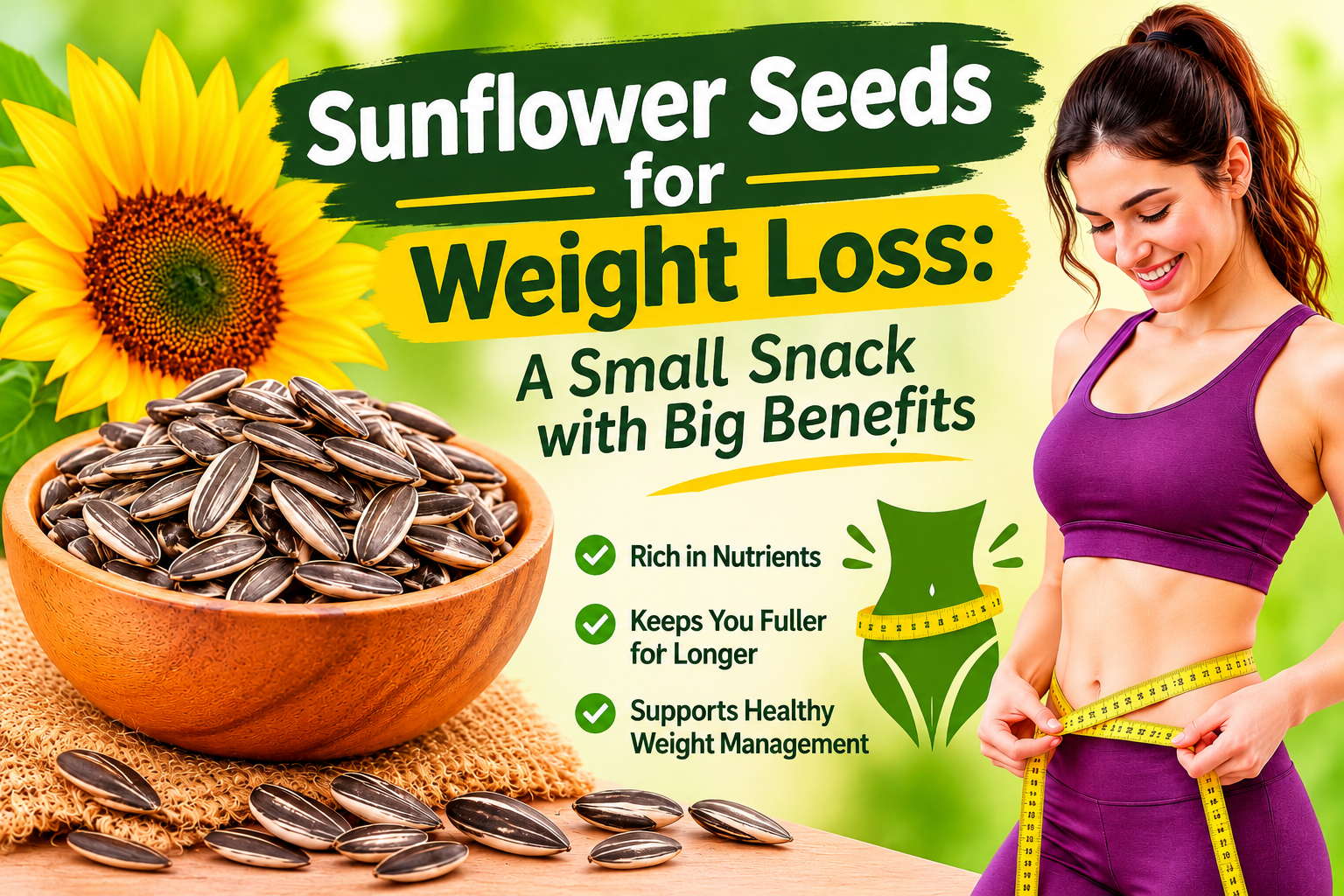
Sunflower Seeds for Weight Loss is a topic that interests people who want to enjoy nutritious foods while managing their body weight. Sunflower seeds are small edible seeds that come from the sunflower plant (Helianthus annuus). They have a mild nutty flavor and work well in many everyday meals.
Sunflowers have a long history. Indigenous communities in North America cultivated them thousands of years ago. People used their seeds as food and also made oil from them. Today sunflower seeds are popular around the world as snacks and cooking ingredients.
These seeds contain protein, fiber, healthy fats and several important minerals. Their nutrients can support a balanced eating plan. However sunflower seeds do not cause weight loss on their own. The amount you eat and your overall daily diet matter much more.
How Sunflower Seeds May Support Weight Management
Sunflower seeds provide nutrients that can make meals and snacks more satisfying. Their protein, fiber and fat content may help you feel full after eating. This can make it easier to manage hunger between meals.
However these seeds are also energy-dense. A small portion contains a noticeable amount of calories. Therefore they work best when you include them in place of less nutritious snacks rather than adding them on top of your usual meals.
For example you could replace a packet of chips with a measured portion of plain sunflower kernels. This simple swap may improve the nutritional quality of your snack while helping you manage your overall calorie intake.
They May Help You Feel Full
Hunger can make it difficult to follow a weight-management plan. If you feel hungry soon after eating, you may reach for extra snacks or larger meals.
Sunflower seeds contain protein, fat, and some fiber. These nutrients contribute to the overall satisfaction you get from food. Adding a small amount to a meal may make it more filling.
You can sprinkle them over a vegetable salad or add them to plain yogurt. These combinations provide texture and flavor without requiring large portions.
They Provide Plant-Based Protein
Protein plays an important role in a balanced diet. It helps build and maintain muscles and supports many body functions. It can also contribute to feelings of fullness after meals.
Sunflower seeds provide plant-based protein which makes them a useful addition to meals for people who eat fewer animal products.
You can combine them with other protein-rich foods such as eggs, beans, lentils or plain yogurt. A balanced meal with different nutrients can help you stay satisfied for longer.
Their Fiber Content Supports a Balanced Diet
Fiber is an important part of healthy eating. It supports normal digestion and can help meals feel more satisfying.
Sunflower kernels contain some dietary fiber although they are not among the highest-fiber foods. You should also eat vegetables, fruits, beans and whole grains to get enough fiber throughout the day.
For example add a teaspoon of sunflower kernels to oatmeal with fruit. This gives your breakfast extra texture and nutrients while keeping the portion manageable.
They Offer Healthy Unsaturated Fats
Sunflower seeds contain mostly unsaturated fats. These fats can form part of a balanced eating pattern when they replace foods high in less healthy fats.
Fat also provides energy and helps the body absorb certain vitamins. However every gram of fat provides more calories than a gram of protein or carbohydrate.
This is why portion control matters. A small serving can add useful nutrients to your diet but eating large handfuls throughout the day can increase your calorie intake quickly.
Calories in Sunflower Seeds
Sunflower seeds contain many nutrients but they also provide a considerable amount of energy in a small serving. One ounce or about 28 grams of shelled sunflower kernels usually contains around 160–170 calories. The exact amount depends on the product and preparation method.
This calorie content does not make them unsuitable for weight management. It simply means you should measure your portions instead of eating directly from a large packet.
Consider these practical tips:
- Use a measuring spoon or small bowl to serve your portion.
- Check the nutrition label before buying packaged seeds.
- Include their calories in your daily food intake.
- Avoid adding large amounts of oil, sugar, or honey.
- Choose plain or lightly roasted varieties when possible.
Key Points to Know:Remember that nutritious food can still contribute to weight gain if you regularly eat more calories than your body needs.
How Much Sunflower Seeds Should You Eat Daily?
There is no single daily serving that works for everyone. Your calorie needs depend on your age, body size, activity level, health and overall eating pattern. When including Sunflower Seeds for Weight Loss in your diet, portion control is important.
A small portion of around one tablespoon can be a practical starting point. You may also choose a measured serving of about one ounce but you should account for its calories in your daily plan.
Start with a small amount and see how it fits into your meals. If you already eat nuts, seeds, oils or other calorie-rich foods, consider the total amount rather than looking at sunflower seeds alone.
You do not need to eat them every day to maintain a healthy diet. Variety matters so include different sources of protein, fiber and healthy fats.
Best Ways to Eat Sunflower Seeds For Weight Management
The way you prepare and serve sunflower seeds can affect the total calories and nutritional quality of your snack. Choose simple methods that do not add unnecessary ingredients.
Here are some easy ideas:
1. Add Them to Salads
Sprinkle a small amount of sunflower kernels over a fresh vegetable salad. They add a crunchy texture and pair well with cucumber, tomatoes, carrots, and leafy greens.
2. Mix Them With Oatmeal
Add a teaspoon of sunflower kernels to plain oatmeal. Include fresh fruit for natural sweetness and extra fiber.
3. Combine Them With Yogurt
Mix a small portion into plain, unsweetened yogurt. This creates a simple snack with a combination of protein, fat, and texture.
4. Use Them in Homemade Snacks
You can combine sunflower seeds with oats and a small amount of dried fruit. Measure the ingredients carefully because dried fruit and sweeteners can increase calories.
5. Enjoy Them as a Simple Snack
Choose plain, unsalted, shelled kernels and serve a measured portion in a small bowl. This helps you avoid eating more than you planned.
Common Mistakes to Avoid When Trying to Lose Weight
Even nutritious foods can become less helpful when you eat them without considering portions. Avoid these common mistakes:
Eating Directly From the Packet: It is easy to lose track of how much you eat. Measure a serving before you start.
Choosing Heavily Salted Seeds: Salt does not directly cause body fat gain but high sodium intake can contribute to water retention. Plain or lightly salted options are often better choices.
Adding Too Much Oil or Sugar: Sweet coatings, extra oil and sugary mixtures can increase the calorie content. Keep preparation simple.
Expecting Quick Results: No single food can remove belly fat or guarantee weight loss. Long-term progress depends on your overall habits.
Ignoring the Rest of Your Diet: Eating sunflower seeds will not balance a diet that regularly contains more calories than your body uses. Focus on your complete eating pattern.
Are Sunflower Seeds Good For Belly Fat Reduction?
Sunflower seeds cannot target belly fat directly. The body does not choose one specific area to lose fat from because you eat a particular food.
You may reduce body fat over time by maintaining a consistent calorie deficit through balanced meals and regular physical activity. Your genetics, hormones, sleep and other lifestyle factors can also influence where your body stores fat.
You can include sunflower seeds in this plan as a measured snack or meal ingredient. However do not treat them as a special belly-fat remedy. Focus on habits that you can maintain over time.
Sum up
Sunflower Seeds for Weight Loss can be a useful part of a balanced eating plan when you control your portions. They provide plant-based protein, fiber and unsaturated fats that can make meals more satisfying. You can add them to salads, oatmeal, yogurt or simple homemade snacks.
However sunflower seeds contain many calories in a small serving. Eating large amounts may make it harder to maintain a calorie deficit. Choose plain varieties, measure your portions and combine them with other nutritious foods.
The most effective approach to weight management includes balanced eating, regular movement, enough sleep and consistent daily habits. Sunflower seeds can support that approach but they cannot replace it.
Frequently Asked Questions (FAQs)
1. Can sunflower seeds help with weight loss?
They may support a balanced eating plan because they provide protein, fiber and healthy fats. However portion control and your total daily calorie intake remain important.
2. How many sunflower seeds should I eat per day?
A small measured serving, such as one tablespoon can be a practical starting point. Your suitable portion depends on your individual calorie needs and the rest of your diet.
3. Do sunflower seeds burn belly fat?
No. Sunflower seeds do not burn belly fat or target a specific body area. Overall fat loss requires consistent eating and activity habits.
4. Are roasted sunflower seeds suitable for weight management?
Plain roasted sunflower seeds can fit into a balanced diet. Check the label for added oil, salt, sugar and serving size.
5. Should I eat sunflower seeds every day?
You can include them regularly if they fit your calorie needs and you enjoy them. However, eating a variety of seeds, nuts, fruits, vegetables and other nutritious foods is a better approach than relying on one food.
6. Are sunflower seeds a good snack when trying to lose weight?
Yes a measured portion can be a nutritious snack. Pairing a small amount with fruit or plain yogurt can make it more satisfying. Avoid eating large quantities straight from the packet.
