


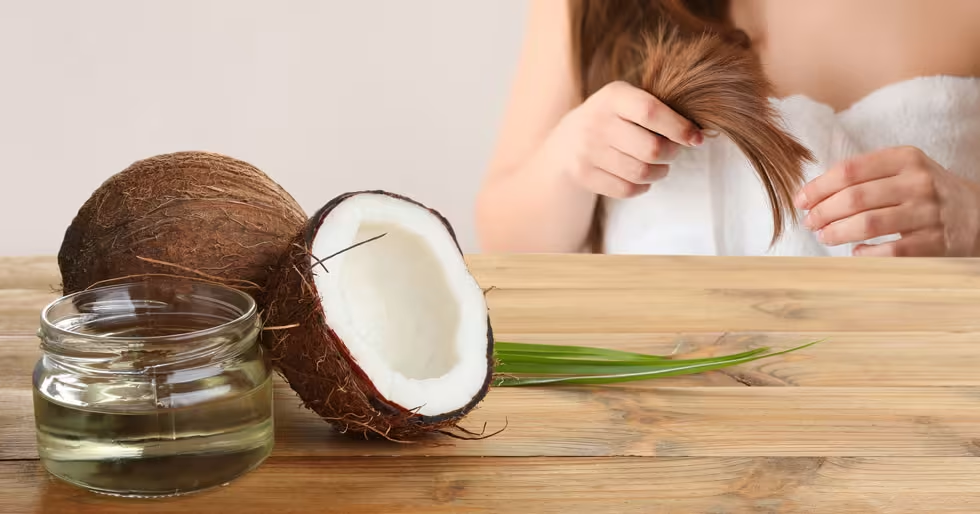
Split ends develop when the hair’s protective outer layer becomes damaged due to heat styling, dryness, chemical treatments or rough handling. They make hair look dry, rough and unhealthy.
Coconut oil can make split ends look smoother and healthier by conditioning dry strands, reducing friction and adding shine. However it cannot permanently repair split ends; trimming is the only way to remove them.
What Causes Split Ends?
Before using coconut oil it helps to understand why split ends develop. Each hair strand has an outer protective layer called the cuticle. When this layer becomes weak or damaged the inner part of the strand becomes exposed. The hair tip may then separate, creating a split end.
Several everyday habits can increase the risk of split ends:
- Frequent heat styling: Hair dryers, straighteners and curling irons can weaken the hair structure when used excessively.
- Chemical treatments: Bleaching, coloring, relaxing and perming can damage the cuticle.
- Rough brushing: Pulling a brush through tangled or wet hair can cause friction and breakage.
- Lack of conditioning: Dry hair becomes harder to manage and more likely to experience friction.
- Environmental exposure: Sunlight, wind and pollution can contribute to dryness and surface damage.
- Frequent washing: Harsh shampoos and unsuitable washing routines may leave hair dry and rough.
Key Points to Know:These factors gradually weaken the hair especially around the ends. Since hair ends are the oldest parts of each strand they often show damage first.
Can Coconut Oil Make Split Ends Look Healthier?
Yes. coconut oil can make split ends look smoother and healthier mainly because of its conditioning properties. It contains fatty acids, particularly lauric acid which has an ability to interact with the hair shaft.
Unlike some oils that mainly remain on the hair surface coconut oil can penetrate the hair shaft to a certain extent. Research suggests that it can reduce protein loss from hair when used before or after washing. This property makes it useful for caring for damaged and fragile strands.
However coconut oil does not permanently close split ends. It can temporarily improve their appearance by coating and smoothing the damaged areas. For this reason it works best as a hair-conditioning treatment rather than a permanent split-end repair solution.
How Coconut Oil Helps Split Ends
Coconut oil offers several benefits that can make damaged hair ends look and feel better.
Softens Dry and Rough Ends
Split ends often feel rough because the protective cuticle has become damaged. Coconut oil helps condition the hair and improve its softness. When you apply a small amount to dry ends, it can make them feel smoother and easier to manage.
Softer hair also experiences less friction during brushing and styling. This can help reduce additional mechanical damage.
2. Reduces Protein Loss
Hair mainly consists of a protein called keratin. Everyday grooming, washing, and chemical treatments can contribute to protein loss and structural damage.
Coconut oil has a useful advantage because its lauric acid content allows it to penetrate the hair shaft. Studies have found that coconut oil can reduce protein loss in both damaged and undamaged hair.
By helping protect the hair structure, coconut oil may reduce further damage that can contribute to breakage and unhealthy-looking ends.
Helps Control Frizz Around Split Ends
Damaged hair ends often look frizzy and uneven. The rough surface of the hair makes it harder for strands to lie smoothly together.
Coconut oil can coat the hair and improve its surface smoothness. This may reduce the appearance of flyaways and frizz, making split ends less noticeable.
Use only a small amount because excessive oil can make the hair look greasy.
Adds Shine to Damaged Hair
Split ends can make hair look dull because damaged strands do not reflect light evenly. Coconut oil can create a smoother surface that helps hair reflect light better.
As a result the ends may appear shinier and more polished. This effect improves the overall appearance of the hair although it does not mean the damaged areas have healed.
Reduces Friction and Breakage
Rough hair ends can catch on clothing, brushes and neighboring strands. Repeated friction can cause more breakage and make existing damage worse.
Coconut oil helps lubricate the strands allowing them to move more smoothly against each other. This can make detangling easier and reduce friction during grooming.
Best Ways to Use Coconut Oil for Split Ends
The way you apply coconut oil can affect the results. Focus mainly on the middle lengths and ends instead of applying large amounts to your scalp.
Coconut Oil as a Pre-Wash Treatment
A pre-wash treatment allows coconut oil to condition the hair before shampooing. It can help reduce protein loss associated with washing.
How to use it:
- Take a small amount of coconut oil in a bowl.
- Rub it between your palms to soften it.
- Apply it to the middle lengths and ends of your hair.
- Leave it on for around 30–60 minutes.
- Wash your hair with a suitable shampoo.
You can try this treatment once or twice a week depending on your hair type.
Coconut Oil as a Leave-In Treatment
A small amount of coconut oil can help smooth dry ends after washing. This method works best for people whose hair tolerates oil without becoming heavy.
How to use it:
- Wash and towel-dry your hair gently.
- Take one or two drops of coconut oil.
- Spread the oil between your palms.
- Apply it lightly to the ends.
- Avoid applying too much near the roots.
Start with a very small amount especially if you have fine hair.
Coconut Oil Hair Mask
A hair mask can provide extra conditioning when your ends feel particularly dry.
How to use it:
- Take one or two tablespoons of coconut oil, depending on your hair length.
- Apply it evenly to your hair lengths and ends.
- Gently spread it through the strands.
- Leave it on for 30–60 minutes.
- Shampoo thoroughly to remove excess oil.
Must-Know Fact:Avoid using excessive amounts because product buildup can make hair difficult to wash and style.
Coconut Oil Cannot Permanently Repair Split Ends
One important fact about split ends is that no oil can permanently reconnect a hair strand once it has split. Coconut oil may smooth the damaged area and temporarily improve its appearance but the separated fibers remain damaged.
If you continue applying oil without removing severely split ends the damage may travel farther up the strand. Regular trims provide the most effective way to remove existing split ends.
You can still use coconut oil after trimming to condition your remaining hair and help reduce further damage.
Tips to Prevent Split Ends From Returning
Removing split ends is only one part of healthy hair care. You should also change habits that contribute to hair damage.
- Trim damaged ends regularly.
- Use conditioner after shampooing.
- Limit the use of straighteners and curling irons.
- Apply heat protectant before using hot styling tools.
- Avoid brushing hair aggressively especially when wet.
- Use a wide-tooth comb to remove tangles gently.
- Avoid excessive bleaching and chemical treatments.
- Protect your hair from unnecessary friction while sleeping.
- Use coconut oil in suitable amounts if your hair responds well to it.
Key Points to Know:These habits can help maintain smoother hair and reduce the chances of developing new split ends.
Sum up
Coconut oil can make split ends look healthier by improving softness, reducing frizz, adding shine and lowering friction between hair strands. Its ability to penetrate the hair shaft and reduce protein loss also makes it a useful option for caring for damaged hair.
However coconut oil cannot permanently repair split ends or restore separated hair fibers. Regular trimming remains the most effective way to remove existing damage. Combine occasional coconut oil treatments with gentle handling, proper conditioning and limited heat styling to maintain smoother healthier-looking hair.
