


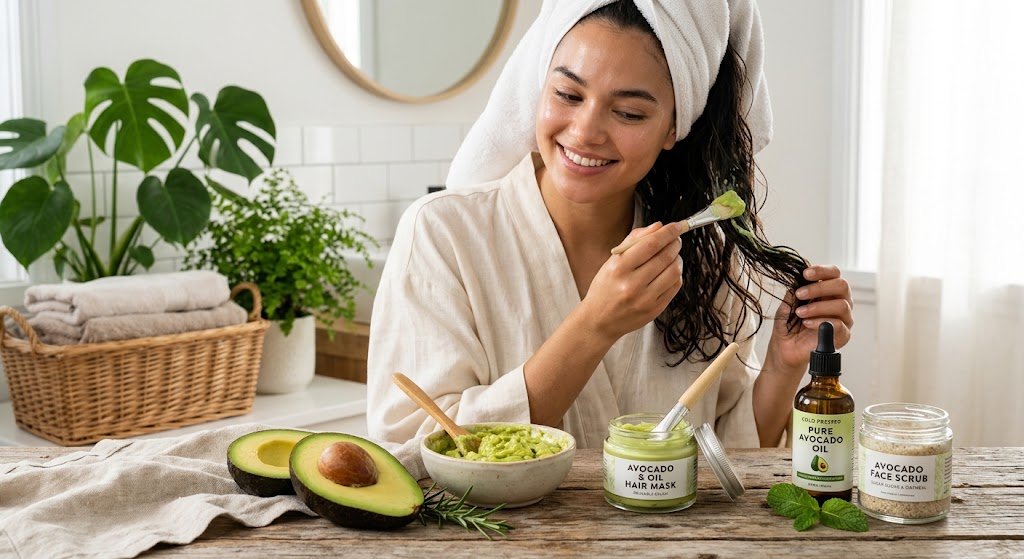
Avocado contains healthy fats, vitamin E, vitamin C and folate that support overall health.
The benefits of eating avocado for skin and hair come from these nutrients which help maintain healthy skin and support normal hair growth. However avocado is not a miracle food and results depend on your overall diet, genetics and daily care habits.
Brief History
Avocados have a long history in Mexico and other parts of Central America. People in these regions have grown and eaten the fruit for thousands of years. Over time avocado became popular in many countries because of its taste, creamy texture and nutritional value.
Today people use avocado in salads, sandwiches, smoothies, dips and many other dishes. It is also found in skin and hair care products especially oils and moisturizers.
Although avocado has a long history as a food its popularity in beauty care does not mean every claim about it is proven. Eating avocado can support general health but the effects on skin and hair are not the same for everyone.
Nutrients That Support Skin and Hair
The benefits of eating avocado for skin and hair are linked to several nutrients that help maintain normal skin function and support overall health.
Healthy Fats
Avocados contain mostly monounsaturated fats. These fats are part of a balanced diet and help the body absorb fat-soluble vitamins including vitamins A, D, E and K.Getting enough healthy fat is important because the skin needs lipids to help maintain its protective barrier. This barrier helps reduce moisture loss and protects the skin from outside irritants.Eating avocado does not directly coat the skin with moisture. Instead it provides nutrients that the body uses as part of its normal processes.
Vitamin E
Vitamin E is an antioxidant that helps protect cells from damage caused by free radicals. These unstable molecules can form through normal body processes and exposure to environmental factors.Avocado provides vitamin E although it is not the only food source. Nuts, seeds and certain vegetable oils also contain this vitamin.Vitamin E supports normal skin health but eating more of it than your body needs will not necessarily produce better skin or reverse existing damage.
Vitamin C
Avocado contains vitamin C which the body uses to make collagen. Collagen is a protein that helps provide structure and support to the skin.Vitamin C also supports normal wound healing and helps the body absorb iron from plant foods. Getting enough vitamin C is important for maintaining healthy tissues.Avocado can contribute to your daily intake but other foods such as citrus fruits, strawberries, peppers and broccoli are also useful sources.
Folate and Other Nutrients
Avocado contains folate, a B vitamin needed for cell division and normal growth. It also provides potassium and smaller amounts of other vitamins and minerals.These nutrients support general health rather than targeting one particular beauty concern. A varied diet that includes fruits, vegetables, protein whole grains and healthy fats is more useful than relying on one food.
Benefits of Avocado For Skin
The advantages of avocado for skin come from its combination of healthy fats, vitamins and other plant compounds. These nutrients can support normal skin function but the changes are usually gradual and may be subtle.
1. Helps Support the Skin’s Moisture Barrier
The skin’s outer layer helps keep moisture inside and protects the body from irritants. When this barrier becomes weak the skin may feel dry, rough or tight.
Healthy fats in your diet help support normal skin structure. Avocado can be one source of these fats especially when it replaces foods that contain large amounts of less beneficial fats.
If your skin is already dry you may still need a suitable moisturizer. Drinking enough water using gentle cleansers and avoiding very hot showers can also help reduce dryness.
2. Supports Normal Collagen Production
Collagen helps keep skin firm and provides structural support. The body produces collagen naturally but this process changes with age and can be affected by sun exposure, smoking and other factors.
Vitamin C from foods such as avocado contributes to normal collagen production. Eating a balanced diet that provides enough vitamin C supports this process.
However avocado cannot erase wrinkles or restore lost collagen on its own. Sun protection, avoiding smoking and a consistent skin care routine are also important for maintaining healthy-looking skin.
3. Provides Antioxidant Support
The skin faces daily exposure to sunlight and environmental pollution. These factors can contribute to oxidative stress which may affect skin cells over time.
Avocados contain antioxidants including vitamin E and other plant compounds. These nutrients contribute to the body’s natural defenses against oxidative damage.
This does not mean eating avocado replaces sunscreen. Use broad-spectrum sunscreen when your skin is exposed to daylight and follow other sun-protection practices to help reduce damage.
4. May Support a Healthier-Looking Appearance
When your diet provides enough essential nutrients your skin has the materials it needs to maintain normal function. This can support a healthy appearance over time.
The avocado benefits for skin and hair should be understood as part of overall nutrition rather than a quick beauty treatment. If your diet lacks healthy fats or certain vitamins, improving your food choices may help address some nutritional gaps.
Still, acne, eczema, persistent redness and uneven pigmentation can have many causes. Avocado alone is unlikely to resolve these problems and persistent symptoms may require advice from a qualified health professional.
Avocado Benefits For Hair Growth
Hair health depends on several factors, including genetics, hormones, age, scalp condition and nutrition. Hair follicles need a steady supply of nutrients to support their normal growth cycle.
The benefits of eating avocado for skin and hair may be most useful when avocado forms part of a balanced diet that provides enough calories, protein, vitamins and minerals.
1. Supports Normal Hair Growth
Hair follicles rely on nutrients to produce hair. A diet that does not provide enough energy, protein, iron or certain vitamins may contribute to hair shedding in some people.
Avocado provides healthy fats and several vitamins so it can contribute to a nutritious eating pattern. However it is not a complete source of every nutrient needed for hair growth.
If you are experiencing noticeable hair loss eating avocado alone is unlikely to identify or correct the cause. Hair shedding may be related to stress, hormonal changes, illness, medication or nutritional deficiencies.
2. Helps Support Overall Hair Quality
Hair can become dry, brittle or damaged because of heat styling, chemical treatments, rough brushing and environmental exposure.
A balanced diet supports the body as it produces new hair. Adequate nutrition is important for healthy hair formation but eating a particular food will not repair damaged hair strands that have already grown out.
To reduce breakage use a gentle shampoo, condition the lengths of your hair, limit excessive heat and avoid hairstyles that pull tightly on the roots.
3. Supports General Scalp Health
The scalp is skin so it also benefits from a balanced diet and normal skin-barrier function. Healthy fats and vitamins contribute to general health which includes the scalp.
However a dry or itchy scalp does not always indicate a lack of healthy fats. Dandruff, irritation, product buildup and certain skin conditions can also cause these symptoms.
If you have persistent itching, redness, scaling or patches of hair loss consider getting medical advice instead of relying only on dietary changes.
Avocado For Hair and Skin Care Products
Eating avocado and applying avocado-based products are two different things. Food provides nutrients through digestion while topical products work mainly on the skin or hair surface.
This distinction matters when comparing avocado oil benefits for hair and skin with the benefits of eating the fruit.
Avocado Oil for Moisture
Avocado oil contains fatty acids and can help soften skin and hair. On hair it may reduce the feeling of dryness and improve manageability. On skin it can help provide a smoother feel by supporting moisture retention.
The phrase avocado oil skin and hair benefits usually refers to these moisturizing and conditioning effects. They are different from the nutritional effects of eating avocado.
People with sensitive or acne-prone skin should test a small amount of a new product first. Stop using it if irritation develops.
Ways to Use Avocado Oil
There are several avocado oil uses for hair and skin depending on the product and your needs.
- Apply a small amount to the dry lengths of your hair before washing if it suits your hair type.
- Use a product containing avocado oil to help soften dry skin.
- Follow the directions on any prepared skin or hair care product.
- Avoid applying oil to irritated or broken skin unless a health professional advises it.
For avocado oil for your hair start with a small amount. Using too much may leave your hair greasy or make it harder to wash out.
Key Points to Know:Similarly avocado oil for hair and skin is not suitable for everyone. Patch-test new products and do not assume that a natural ingredient cannot cause a reaction.
What About Avocado Butter?
Avocado butter is used in some moisturizer body butters and hair products. Depending on its formulation it may help soften dry areas and reduce the feeling of roughness.
The benefits of avocado butter for skin and hair mainly relate to conditioning and moisture support. It is not the same as eating avocado and applying it does not provide the body with the same nutritional benefits.
Choose products according to your skin and hair type and check the full ingredient list if you have sensitive skin.
Adding Avocado to Daily Meals
You do not need to eat a large amount of avocado to make it part of a balanced diet. Small portions can fit into everyday meals.
Try these simple options:
- Add sliced avocado to whole-grain toast.
- Mix diced avocado into a salad.
- Mash it with lemon juice and use it as a sandwich spread.
- Add a small portion to a grain bowl with vegetables and protein.
- Blend avocado into a smoothie for a creamy texture.
- Serve it alongside eggs, beans or other protein-rich foods.
Avocados contain calories because they are rich in fat. That does not make it unhealthy but portion size matters if you are managing your overall calorie intake.
Key Points to Know:For the best results combine avocado with a varied diet instead of treating it as a replacement for other fruits, vegetables and protein sources.
Effects of Eating Avocado
The benefits of eating avocado for skin and hair are not usually immediate. Any changes depend on your starting diet, general health and the cause of your skin or hair concern.
In the First Few Days
You may notice that avocado makes meals more filling because it contains fat and fiber. You are unlikely to see a clear change in skin texture or hair growth within a few days.
After Several Weeks
If avocado helps improve the overall quality of your diet it may contribute to better nutritional support for normal skin and hair function. However visible changes are not guaranteed and it may be difficult to link them to one food.
Over Several Months
Hair grows slowly and changes in hair density or shedding can take time to assess. Skin also changes in response to many factors, including sleep, stress, sun exposure, hormones and skin care habits.
There is no fixed timeline for avocado to improve skin or hair. If you have ongoing hair loss or a persistent skin problem do not delay appropriate care while waiting for dietary changes to work.
Research on Avocado Benefits
Research supports the importance of a balanced diet for normal skin and hair function. Nutrients such as vitamin C vitamin E and healthy fats have known roles in the body.
Some small studies have examined avocado consumption and skin-related measures but the evidence is still limited. Results from a small study cannot establish that avocado will produce the same changes in everyone and they do not prove that avocado directly increases hair growth.
There is also a difference between evidence about a nutrient and evidence about one particular food. For example vitamin C is needed for collagen production but that does not mean eating avocado alone will noticeably reduce wrinkles.
More research is needed to establish specific effects of avocado consumption on skin appearance and hair growth. For now it is best to view avocado as one nutritious food within a varied diet.
Possible Disadvantages of Eating Avocado
Avocado is nutritious but it may not suit everyone in the same way.
High in Calories
Avocado contains healthy fats but it is also energy-dense. Large portions can add a significant number of calories to your meals. A moderate portion is often enough to enjoy its nutritional value.
Digestive Discomfort
Avocado contains fiber which supports digestion. However suddenly eating a large amount may cause bloating or discomfort in some people especially if they are not used to high-fiber foods.Increase your intake gradually and pay attention to how your body responds.
Allergic Reactions
Some people may experience an allergic reaction to avocado. People with certain latex allergies may also react to avocado because of cross-reactivity.Stop eating it if you notice symptoms such as itching, swelling or hives. Seek urgent medical care if you experience trouble breathing or swelling of the throat.
It Does Not Replace Treatment
Avocados cannot treat every cause of hair loss, acne, dry skin or pigmentation. These conditions may need specific care and relying on food alone can delay effective treatment.
Sum up
The benefits of eating avocado for skin and hair come from its healthy fats, vitamins and other nutrients. It can support a balanced diet, help provide nutrients involved in normal skin function and contribute to overall health.
Still avocado is not a quick fix for wrinkles, hair loss or other beauty concerns. You are more likely to support healthy skin and hair by combining nutritious meals with gentle hair care, suitable skin care, sun protection and good daily habits.
Include avocado in your meals if you enjoy it but keep your expectations realistic. Consistency, variety and overall health matter more than relying on a single food.
Frequently Asked Questions
Is avocado good for skin and hair?
Yes. avocado provides healthy fats and vitamins that support general health. It can contribute to a balanced diet but it cannot guarantee clearer skin or faster hair growth.
How often should I eat avocado for skin health?
You can include avocado regularly in moderate portions if it suits your diet. There is no scientifically established amount or schedule specifically proven to improve skin or hair.
Can eating avocado make hair grow faster?
There is not enough evidence to say that eating avocado directly speeds up hair growth. It can contribute to overall nutrition which is important for normal hair growth.
Does avocado help dry skin?
Eating avocado provides nutrients that support normal skin function while moisturizers can help relieve surface dryness. Persistent dryness may have other causes and may need specific skin care.
Is applying avocado better than eating it?
Neither approach is universally better. Eating avocado provides nutrients through your diet while avocado-based topical products may help soften skin or condition hair. Their effects are different and results depend on the product and individual.
